Quick answer
Shogran to Naran is roughly 60 km and takes two to two and a half hours because of the road, not the distance. The route runs back down to Kiwai then up the Kaghan road through Paras and Kaghan town. It is seasonal beyond a point in winter.
Sixty kilometres in two and a half hours sounds wrong until you have driven it. The road is the reason, and it is worth understanding before you decide whether to day-trip or move base.
The route
First you come back down the 7 to 9 km from Shogran to Kiwai, which takes 30 minutes on its own. Then you rejoin the Kaghan road and head northeast, following the Kunhar river through Paras and Kaghan town before reaching Naran.
The road climbs steadily. Naran sits at around 8,200 ft, a few hundred feet higher than Shogran. It is narrow in places, busy in peak season, and slowed by roadworks in some years.
Worth stopping for
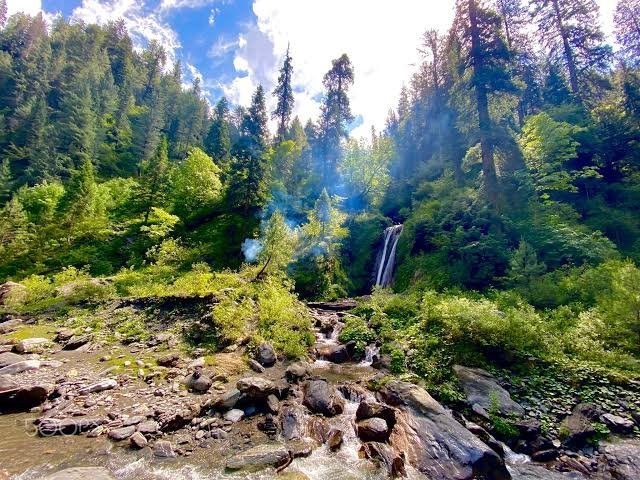
- Kiwai – the waterfall and the roadside trout, right at the bottom of the Shogran climb
- Paras – the turn-off for Sharan Forest, a worthwhile detour in its own right
- Kaghan town – the settlement that names the valley, a useful stop for food
- The river – the Kunhar runs alongside almost the entire way and there are pull-offs throughout
Day trip or move base?
As a day trip
Feasible but long. Five hours of driving round trip leaves limited time in Naran, and Naran itself is mainly a launch point for Lake Saif-ul-Malook, which needs its own jeep ride of an hour or more each way. Doing Shogran to Naran to the lake and back in one day is a very full day with a lot of it spent in a vehicle.
Moving base
The better option if you have three or more nights. Do Siri Paye from Shogran, then move up to Naran for a night or two and do Saif-ul-Malook and potentially Babusar Top from there. This removes a lot of repeated driving.
Season
The road to Naran is generally open from around May to October. In winter it closes beyond a point and Naran largely shuts down as a destination. Check current status in is Shogran open right now before planning around it.
Shogran or Naran as a base?
Shogran is lower, more forested, closer to Islamabad, and has Siri Paye. It suits shorter trips and visitors who want green and trees.
Naran is higher, more barren and more dramatic, and is the gateway to Saif-ul-Malook and Babusar. It suits longer trips and visitors heading further north.
Many people do both, which is the sensible answer if you have the days. For the overall picture, see the complete Shogran Valley guide.
If you want the whole valley handled as one trip including the jeep rides and hotels at both ends, our tour packages cover it. Message us with your dates.
Key facts at a glance
| Distance | About 60 km |
|---|---|
| Driving time | 2-2.5 hours |
| Route | Shogran to Kiwai to Paras to Kaghan to Naran |
| Naran altitude | About 8,200 ft |
| Season | Roughly May to October |
| Day trip? | Possible but long |
Frequently asked questions
How far is Naran from Shogran?
About 60 km, which takes two to two and a half hours because of road conditions and the 30-minute descent from Shogran to Kiwai before you even join the Kaghan road.
Can I visit Naran as a day trip from Shogran?
You can, but it is around five hours of driving round trip. If you also want Lake Saif-ul-Malook, which needs its own jeep ride, you are better off spending a night in Naran.
Should I stay in Shogran or Naran?
Shogran is lower, greener and closer to Islamabad, with Siri Paye above it. Naran is higher and is the gateway to Saif-ul-Malook and Babusar Top. For a three-night-plus trip, stay in both.
Is the road from Shogran to Naran open in winter?
It closes beyond a point in winter and Naran largely shuts down as a destination. The road is generally open from around May to October. Check current conditions before planning.